
Click to view a full-size image of the field tour map.
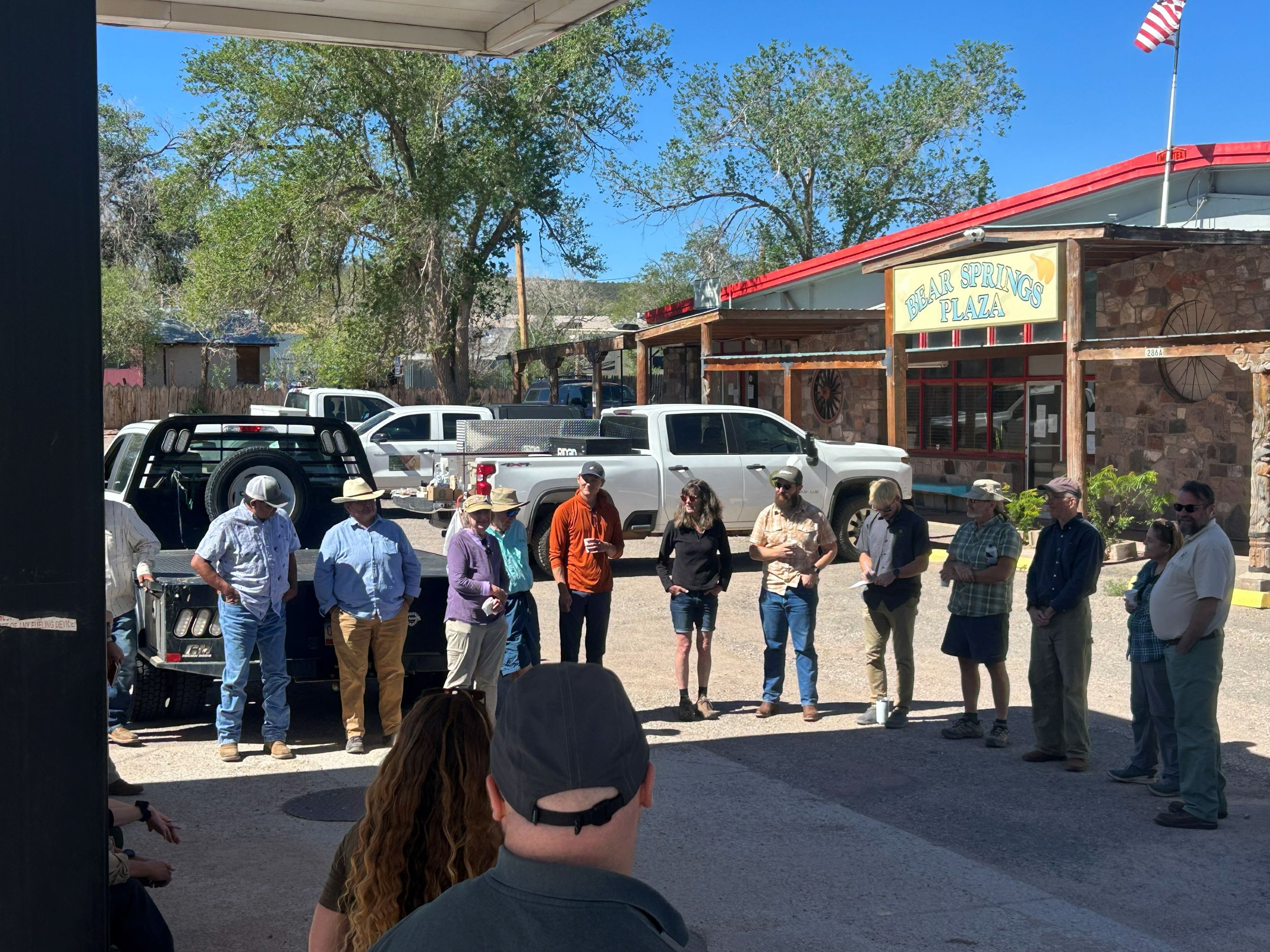
Gathered at the Bear Springs Plaza one hot and sunny morning in early July, around 50 individuals prepared to spend a day together in the woods viewing and discussing forest health restoration as part of the Zuni Mountains Collaborative Forest Landscape Restoration Program (CFLRP). Coming from more than a dozen organizations, these folks represented Collaborative partners and community members who care deeply about the future of our forests, rivers, and grasslands. This field tour, organized by the US Forest Service and Forest Stewards Guild, highlighted recent forest thinning treatments, the success of an interaction between a 2025 wildfire and restored ponderosa pine forest, and the implications of recent research on the endangered Mexican Spotted Owl.
Click here for a copy of the field tour agenda.
Click to jump to a summary and resources from each tour stop:
McQue Unit 1: CFLRP program overview, forest thinning, and the Merrill Fire
Perea Unit 11: forest thinning, forest products utilization, and contractor inspections
Quaking Aspen campground: Mexican spotted owl (MSO) protected activity center (PAC) habitat and future treatments
Wrap Up: final takeaways, a photo gallery, and additional handouts from the day
McQue Unit 1
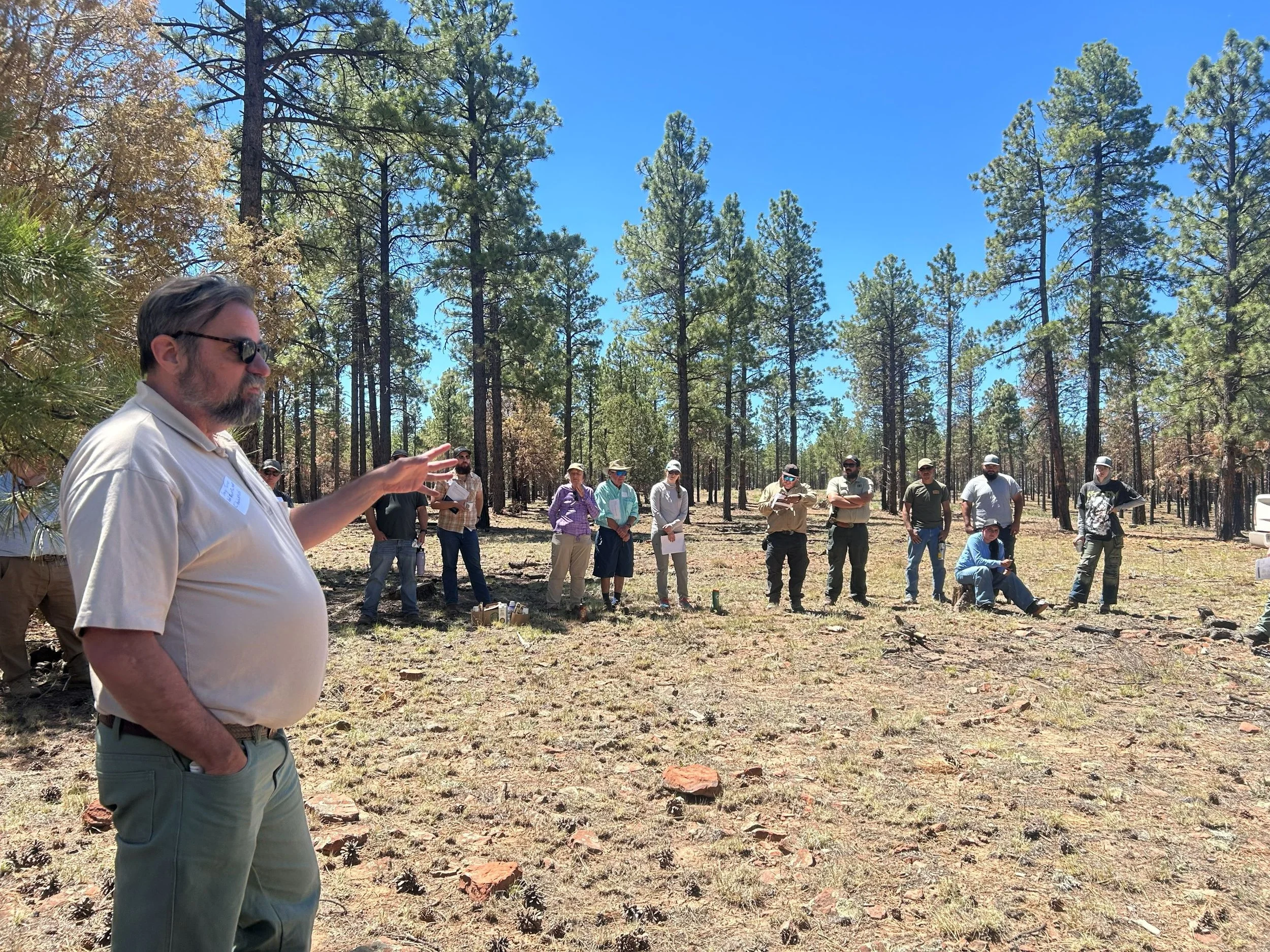
Mt. Taylor District Ranger Ryan Washam offers opening remarks to tour participants.
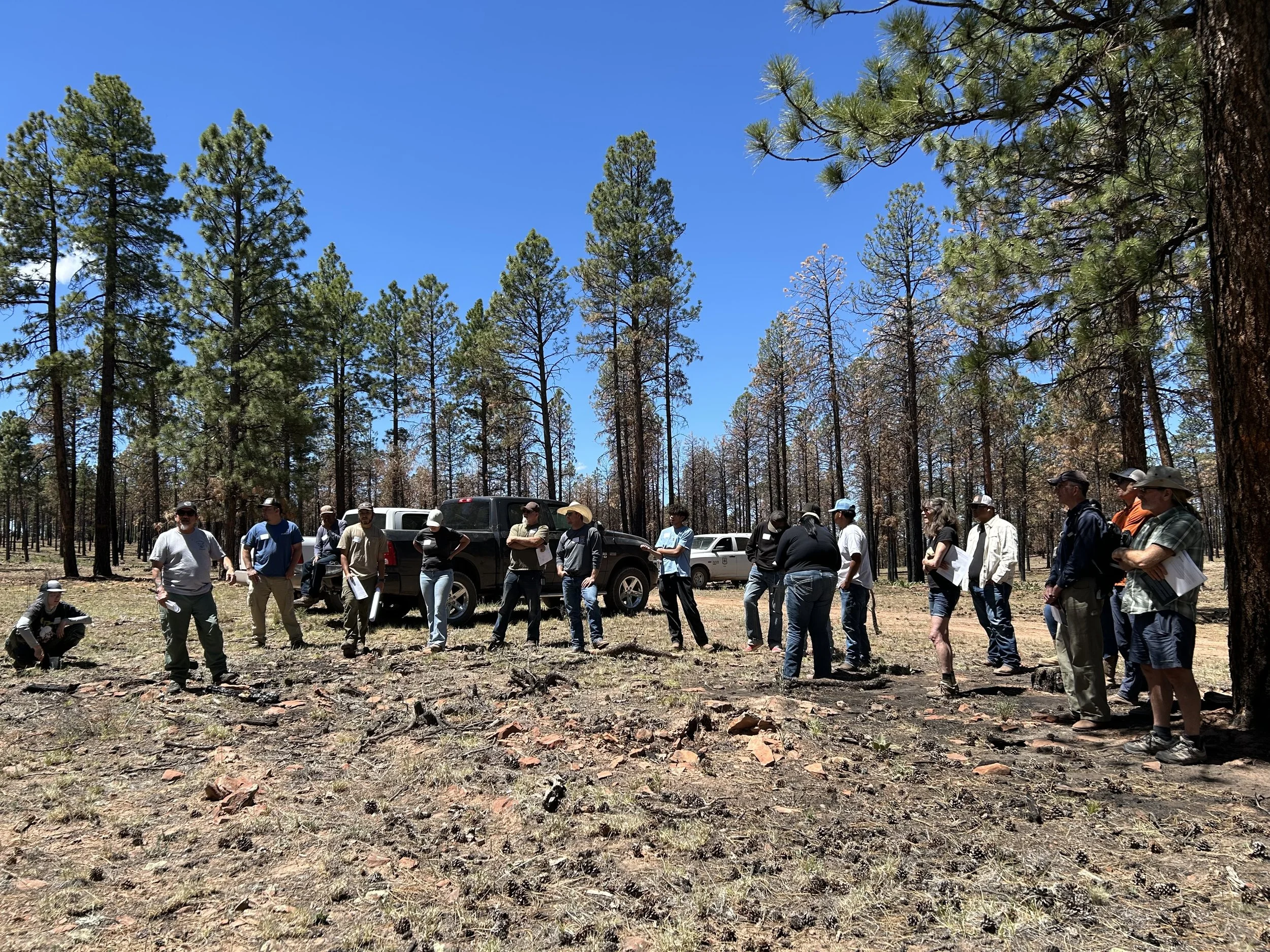
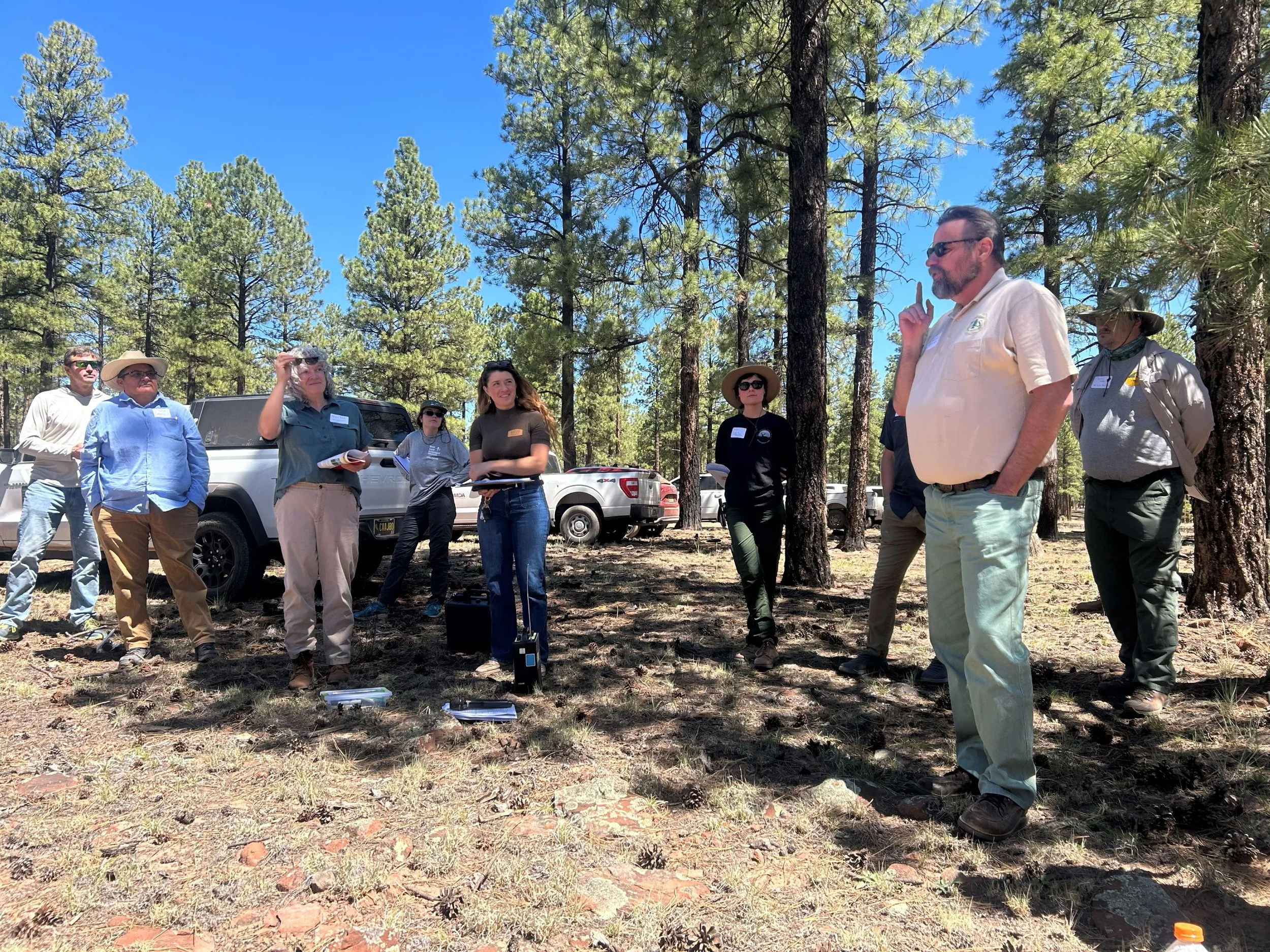
The tour, organized by the Forest Stewards Guild and USDA Forest Service, traveled first to the McQue 1 forest thinning unit in the western Zuni Mountains, stopping at the location where the 2025 Merrill wildfire was contained. Here, Bryce Esch, National CFLRP Program Coordinator, provided a valuable overview of the program’s history, effectiveness, and outlook for the future. Jason Eakins, Mt. Taylor RD Timber Sales Administrator, spoke on the progress of thinning projects, noting successes and challenges. Finally, Ryan Carbajal, Mt. Taylor RD Fire Management Officer, provided a description of how forest treatments allowed firefighters to contain the 2025 Merrill wildfire. To read more about the interaction between the Merrill Fire and forest treatments, check out last year’s field tour blog.
Handouts from Stop 1
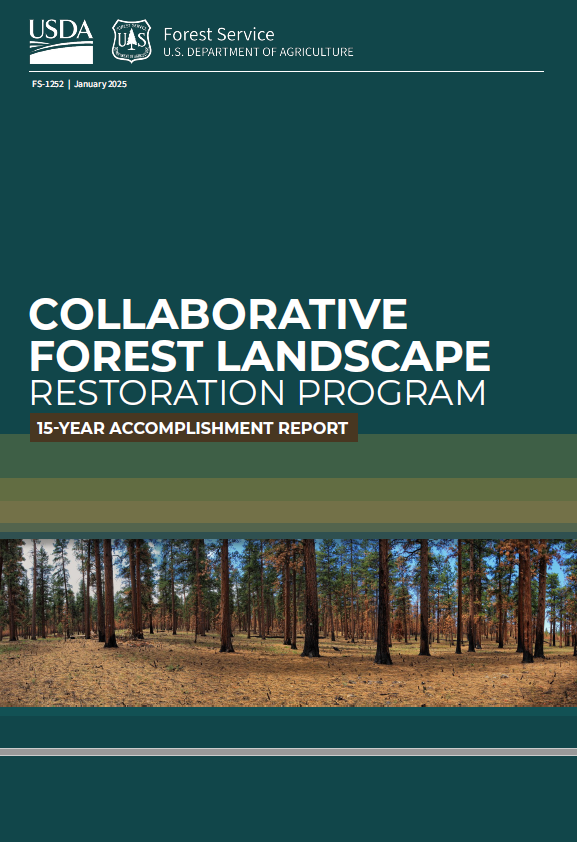
CFLRP 15-year accomplishment report
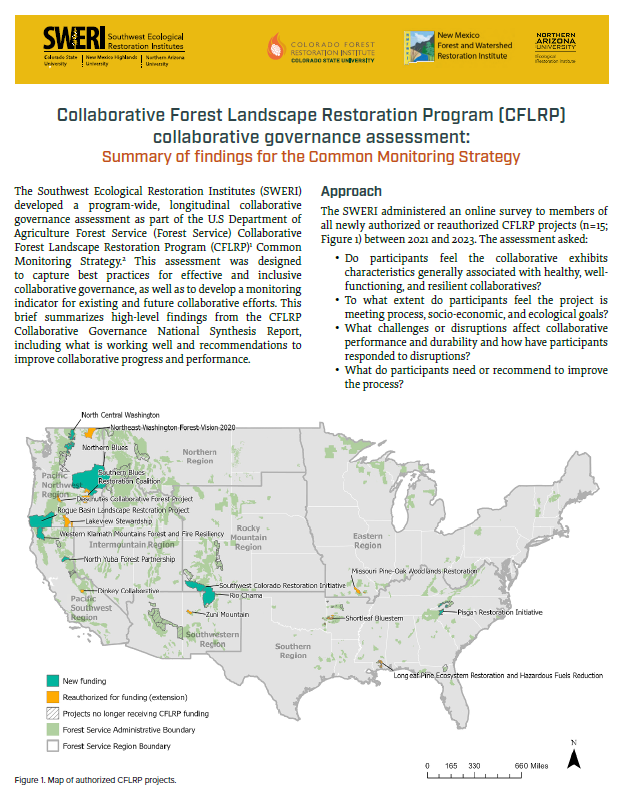
CFLRP collaborative governance assessment (national)
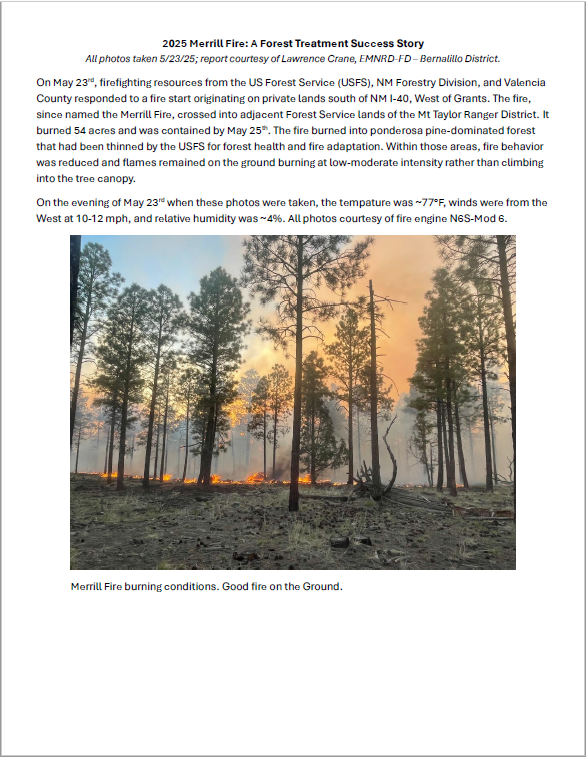
Merrill Fire brief and photos courtesy of EMNRD Forestry Division
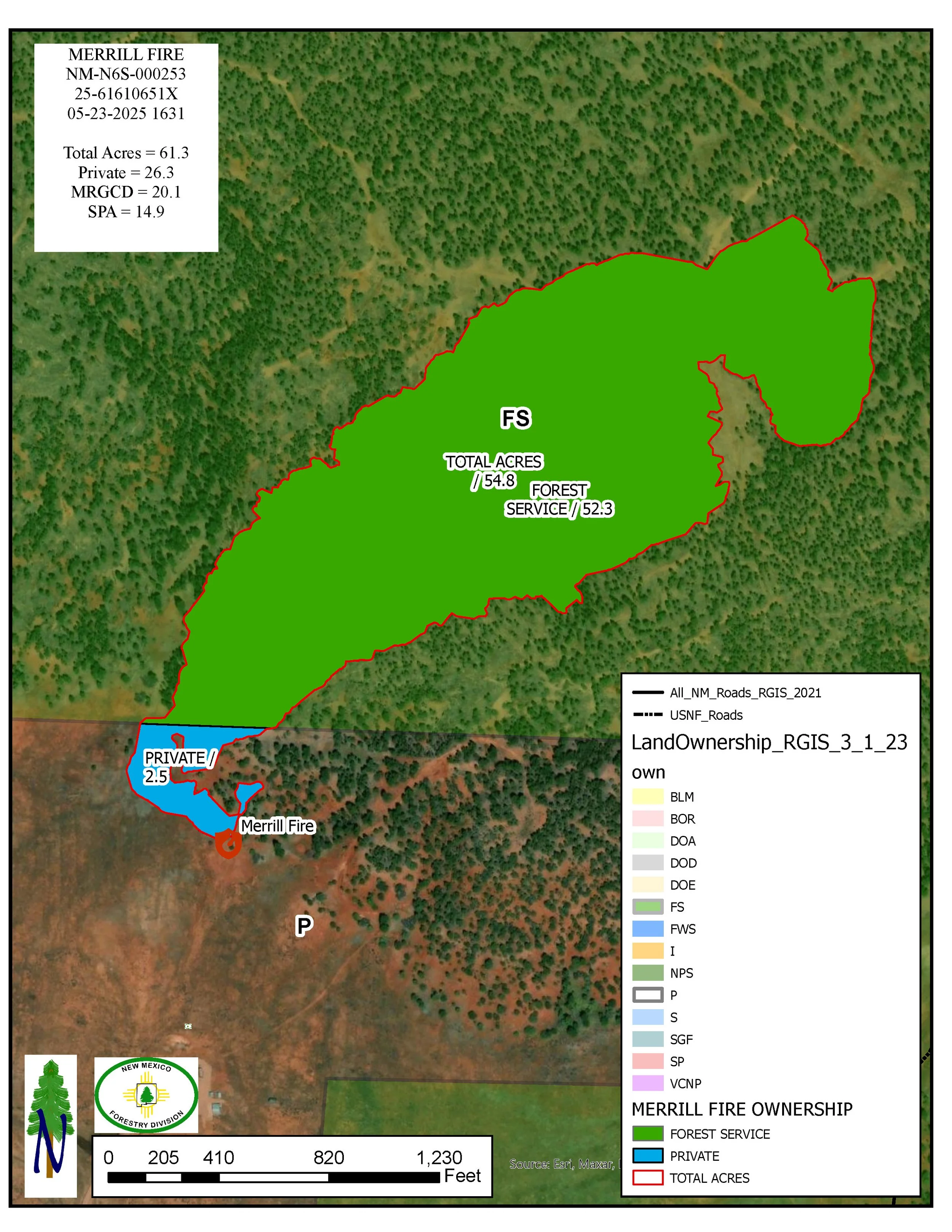
Land ownership map and acreage burned by the Merrill Fire
Perea Unit 11
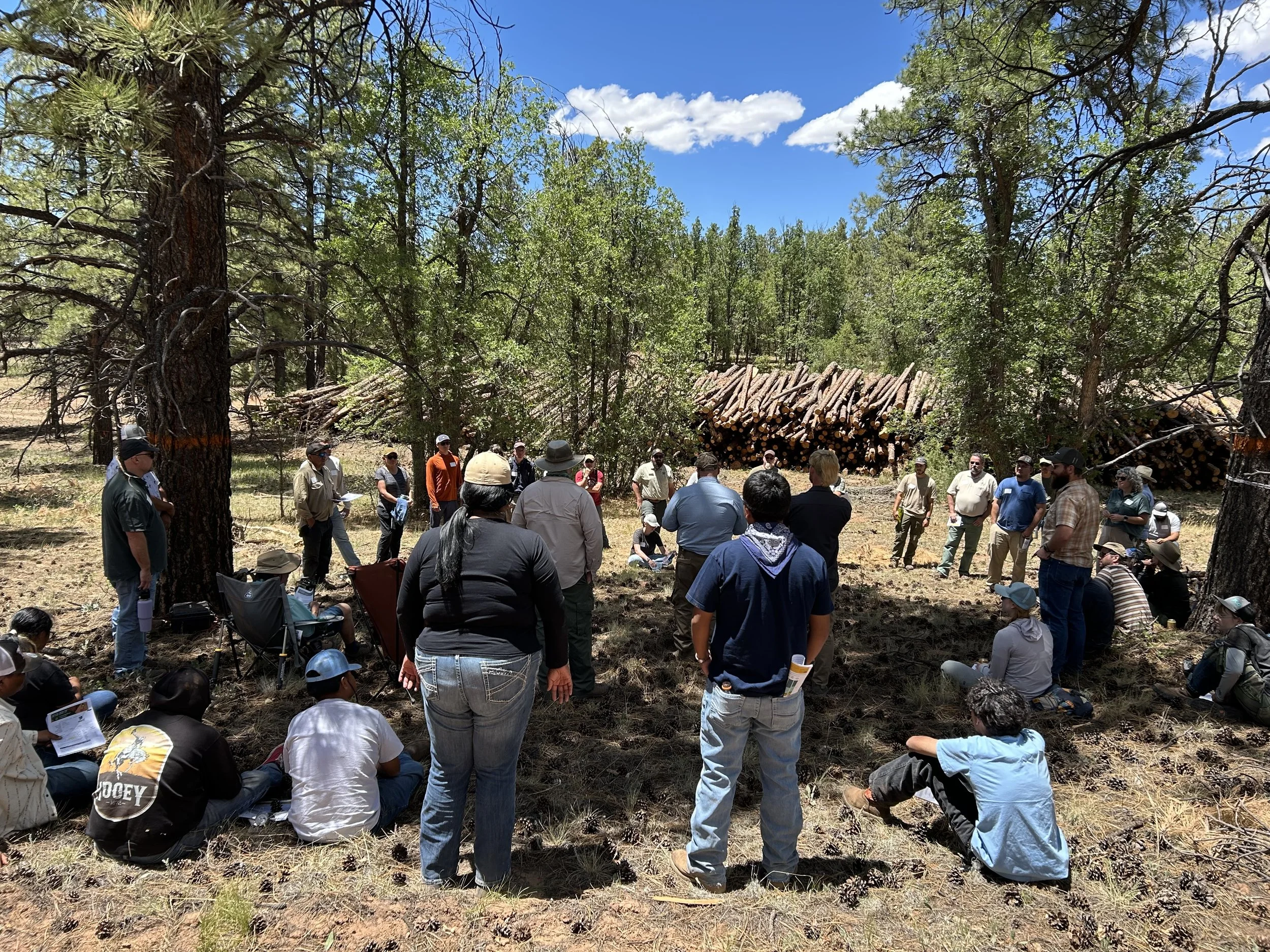
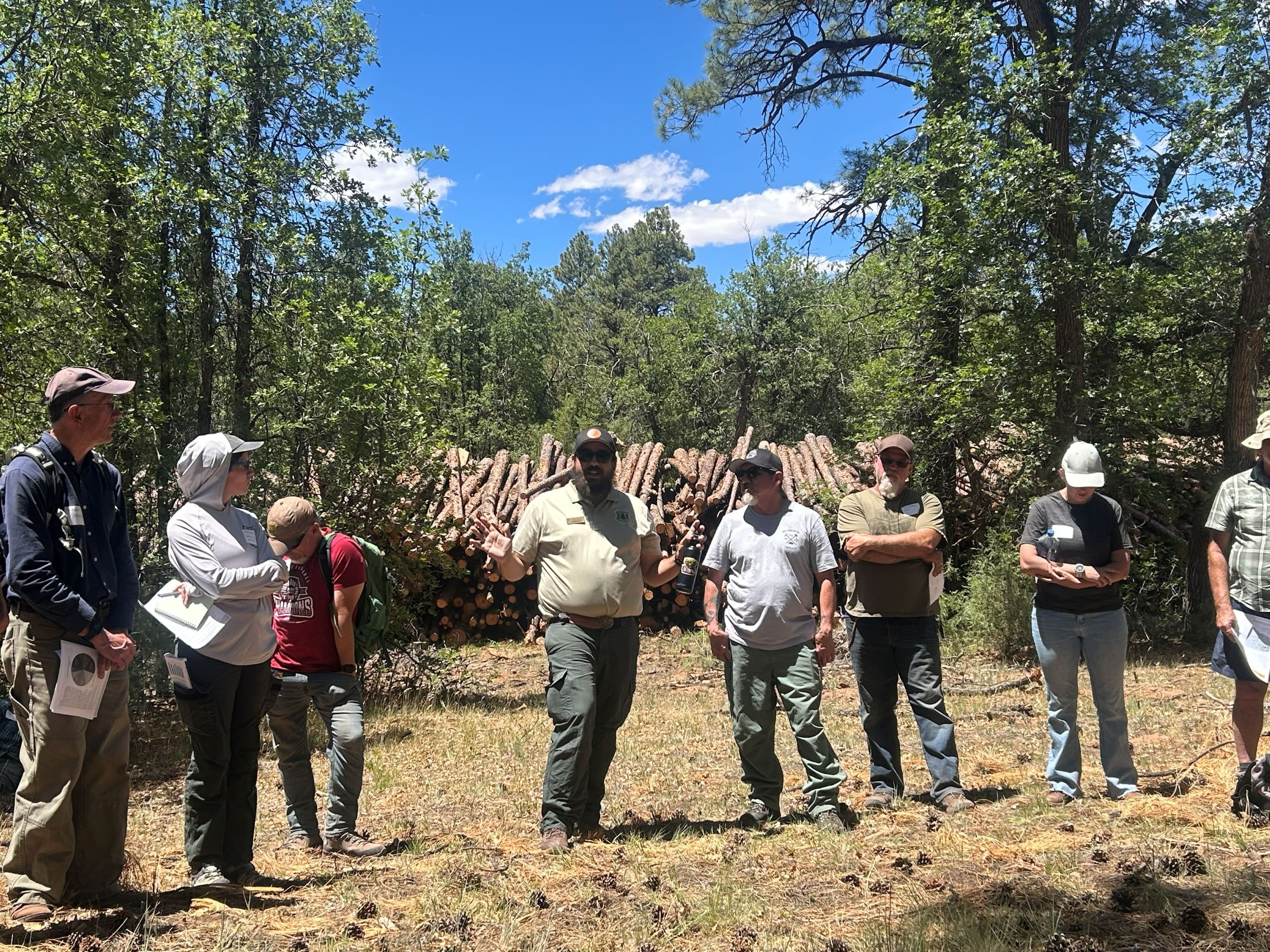
Field tour attendees gather for discussion in front of a recently cut log deck at Perea 11.
The drive from the first to second stop took the group through progressively more recent forest thinning treatments. Along the way they saw slash (tree limbs left over from thinning) and dry needles scattered along the forest floor and decks of cut logs which have been removed from the forest canopy and are now waiting to be sold to a wood mill or other forest products producer. After gathering in the shade of this thinned canopy, the group learned how forest treatments are implemented from the individuals who help make it happen.
Jason Eakins spoke about the unique characteristics of the Perea units and differences between different units. These included underlying site differences (how the ecology varied, such as more oak being present in one unit and the understory being more sparse in another)and differences in how thinning was carried out with consideration for average tree size, the presence of slash, and other characteristics. Clay Benton, Chief Operating Officer with Forest Fitness, Inc. (the forestry company contracted to thin these units), described the dedication of his team, their frequent communication with Jason to ensure they are thinning according to the Forest Service prescription, and their experience learning how to do their job better and faster over the past 5 years of working in the Zuni Mountains. Forest Fitness recently upgraded their equipment, which has generated non-trivial improvements in their capacity. Finally, the group heard from Todd Haines, forestry consultant for the National Wild Turkey Federation (who hold a Stewardship agreement for the CFLRP treatment work) who described his process for inspecting sites to guarantee quality control.
Before departing, participants had the privilege of hearing from Cibola NF Deputy Supervisor Yolynda Begay, who described the foundational role that Tribes play in stewarding this landscape, both with their interest in protecting sacred sites and in supporting forest management practices and projects that make the forest more resilient for everyone who cares for and depends on it.
Handouts from stop 2
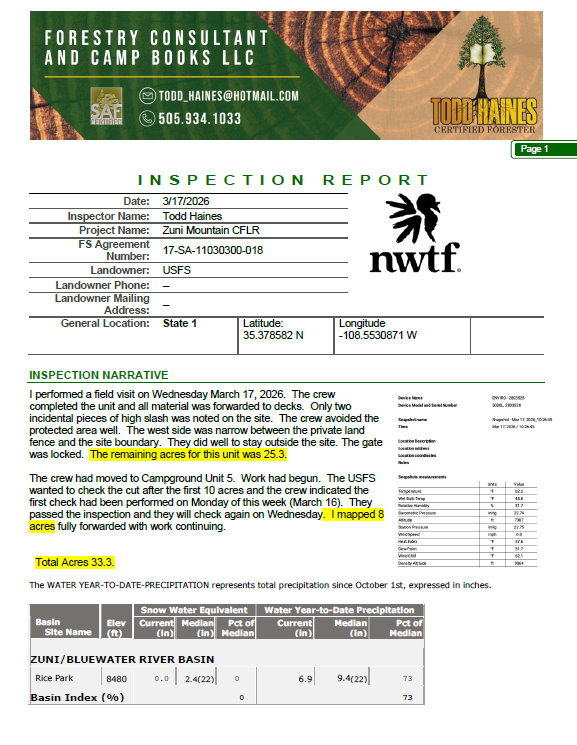
Example thinning inspection report from the National Wild Turkey Federation
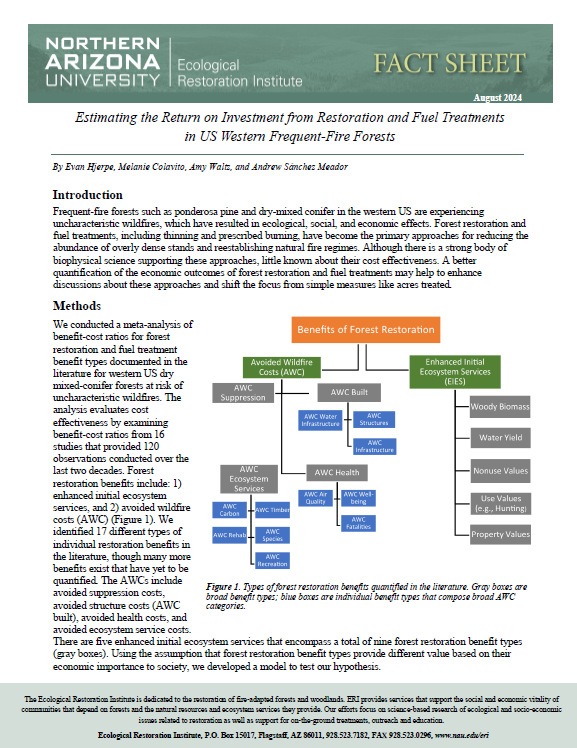
NAU return on investment fact sheet showing that forest health restoration is an economically sound investment
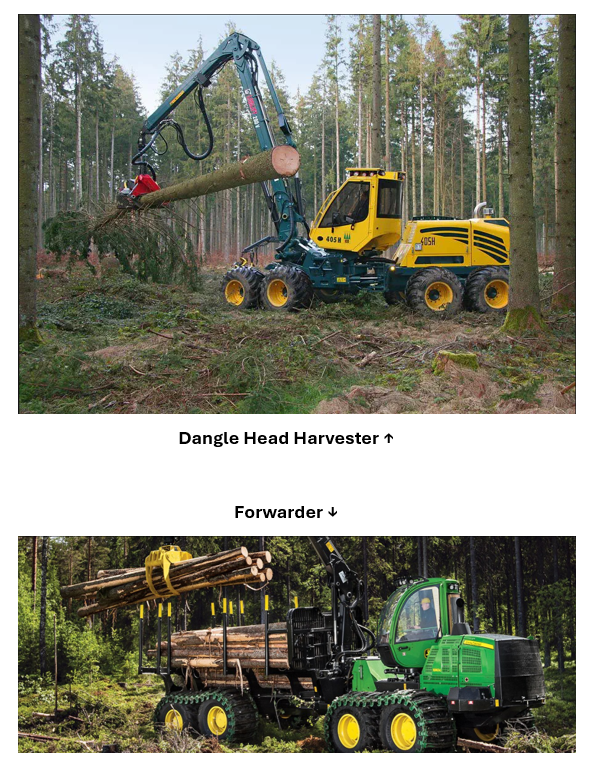
Information on forest thinning units viewed during the field tour, including an overview of the silvicultural prescription and what was left behind after thinning.
Quaking Aspen Mexican spotted owl (MSO) protected activity center (PAC)
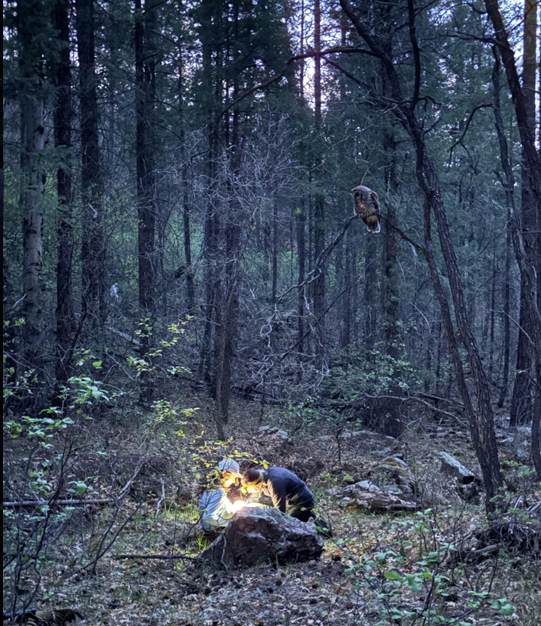
USFS Biology Technicians work within a Protected Activity Center (PAC) tagging a Mexican Spotted Owl (MSO) to track its movements while another owl looks on from a branch overhead. These tags have allowed researchers to study MSO habitat use and activities, leading to a new understanding of the importance of forest heterogeneity and pyrodiversity in this species’ conservation.
Photo attribution: Andrea Chavez, US Forest Service.
At this last tour stop, attendees walked south from Quaking Aspen Campground along the Quaking Aspen trail, moving from open ponderosa pine forest to a stand of darker, thicker, and noticeably cooler mixed conifer forest. Here, on the edge of a Mexican Spotted Owl PAC - an area which is determined to be suitable roosting habitat for the endangered species - we heard from Cibola NF Wildlife Biologist Paige Handley about MSO habitat use and the value of heterogeneity. Paige told the group that researchers and biologists have learned that MSO benefits from a mosaic of ecosystem conditions (e.g. some thinned, some dense intact forest, some open areas) which they will utilize for different activities. The denser, closed canopy, mixed species stands like the one the group was standing in provide excellent nesting habitat for MSO, but more open and pyrodiverse areas that provide an abundant prey base are better for foraging. To this end, strategic thinning around the edges of a PAC can create better prey habitat, increasing the hunting viability for owls roosting within the PAC while also decreasing the risk of high severity fire. The takeaway was that protecting PACs, and protecting the owl, is more complicated than taking a hands-off approach and not doing any management within these patches of suitable habitat. In the near future, the management implication for this species is that implementing strategic cutting of small-diameter mixed conifer adjacent to core MSO habitat is an important measure for their conservation.
To learn more about research into MSO habits and habitat use, refer to the Spring 2026 Collaborative meeting recap notes and Paige’s MSO presentation.
Wrap Up
The day concluded with reflections from the future stewards of this landscape - interns from the Ramah Navajo Natural Resources Department and youth crew members with the Forest Stewards Youth Corps. These individuals expressed gratitude for being able to participate in the tour and described their sense of awe at the sheer complexity and scale of forest management in the Zuni Mountains. We hope this tour serves as a building block for them to go on to do the important work of stewarding these forests into the future.
Photo gallery from the tour
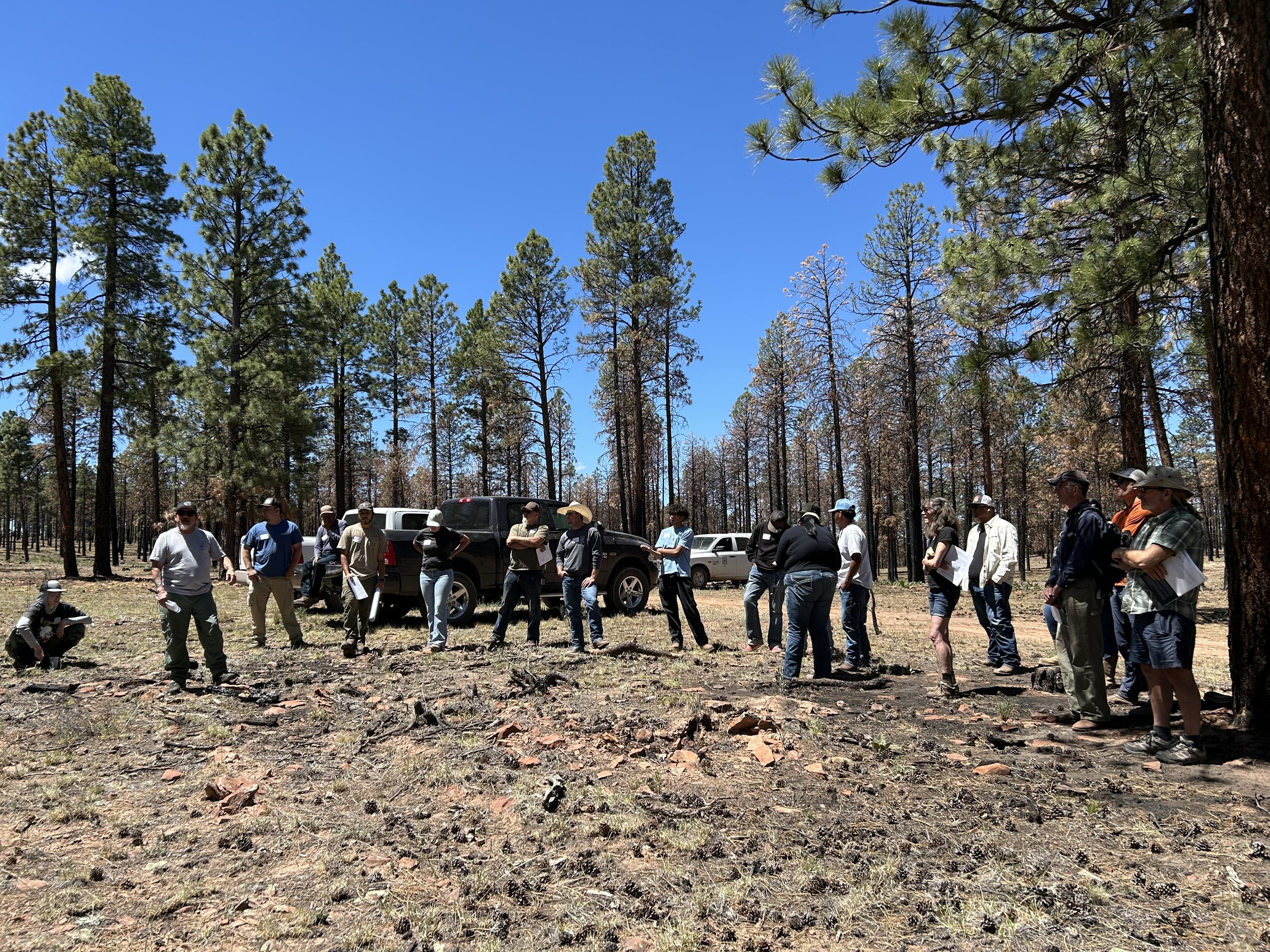
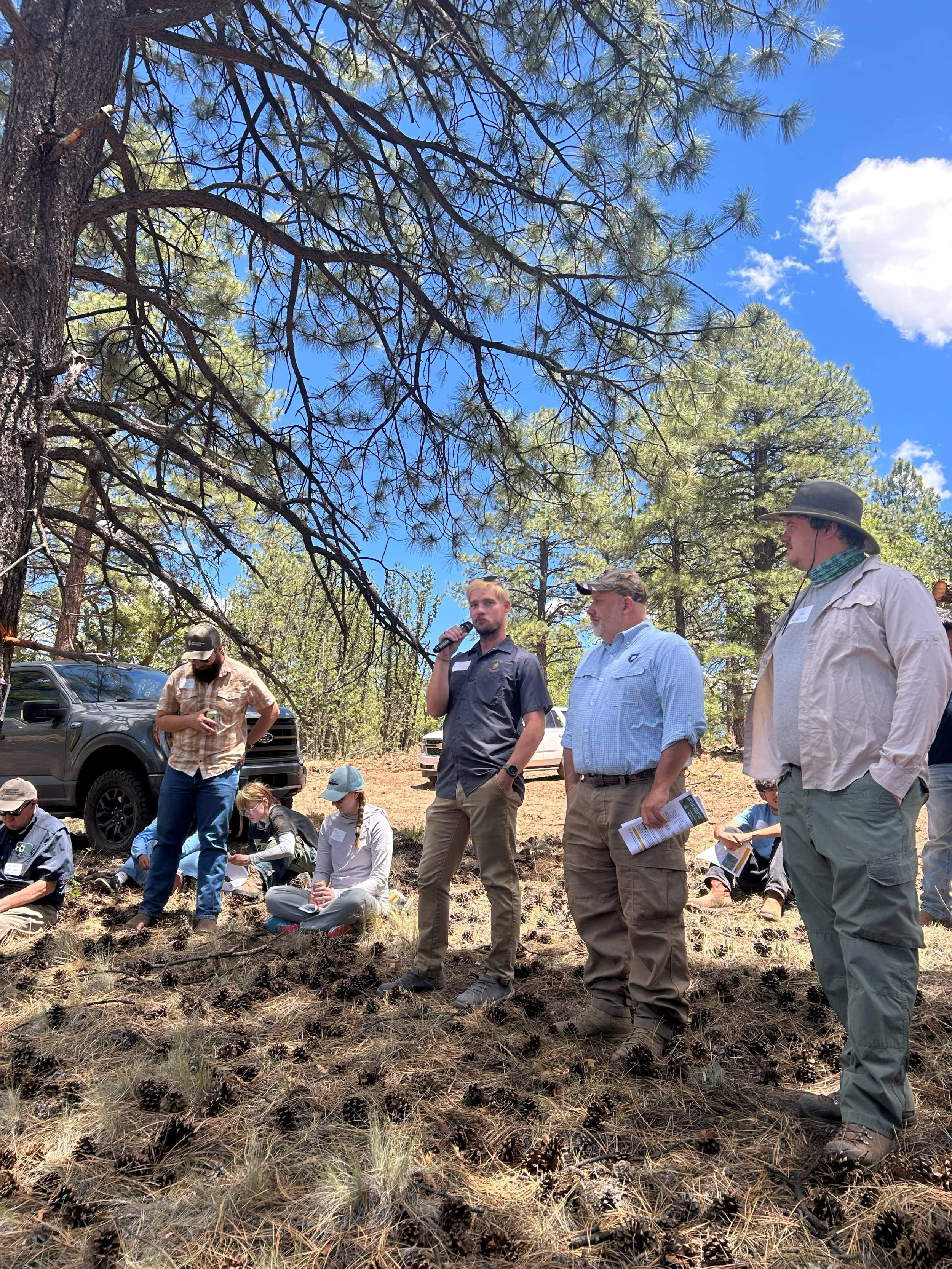
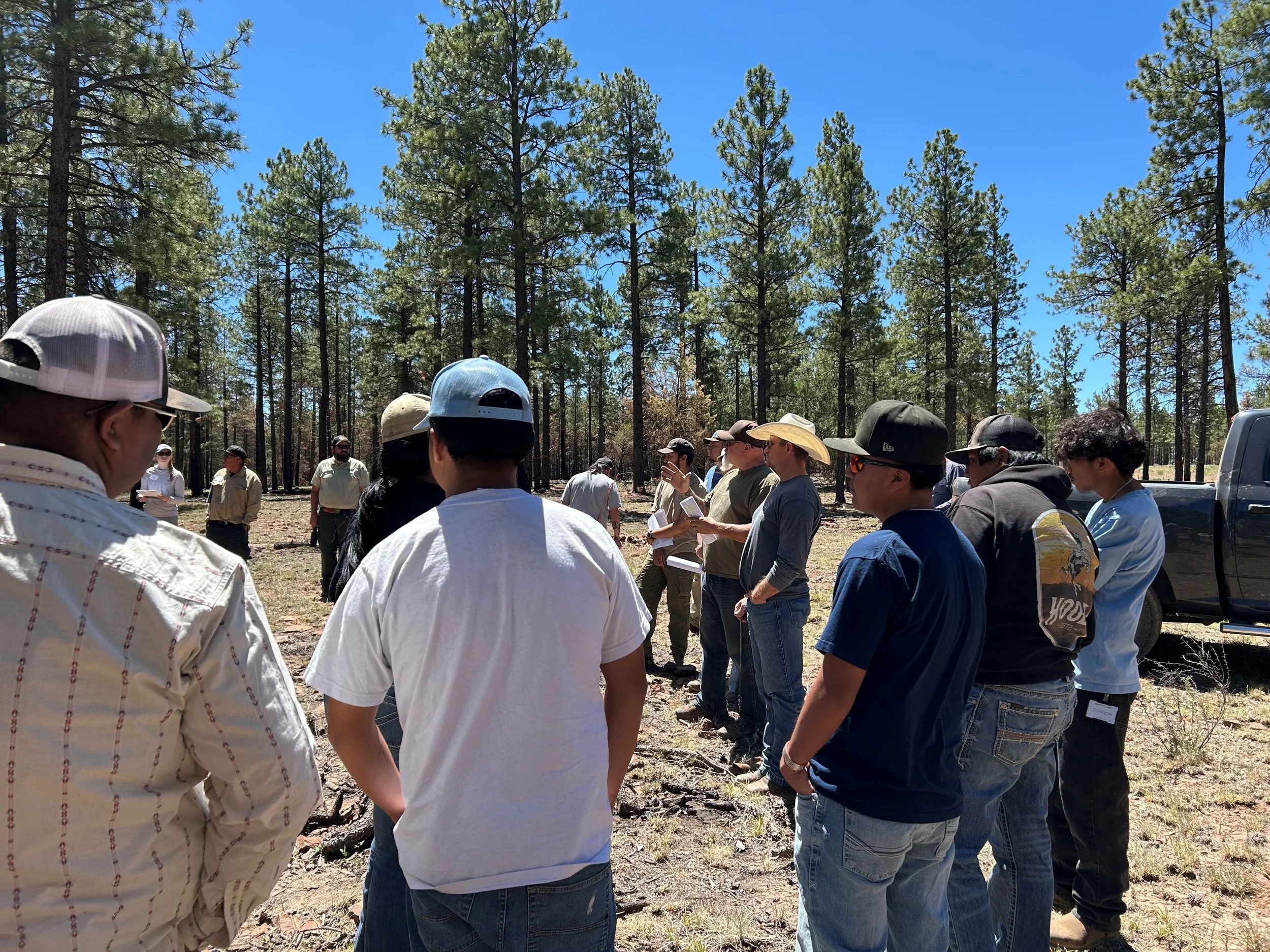
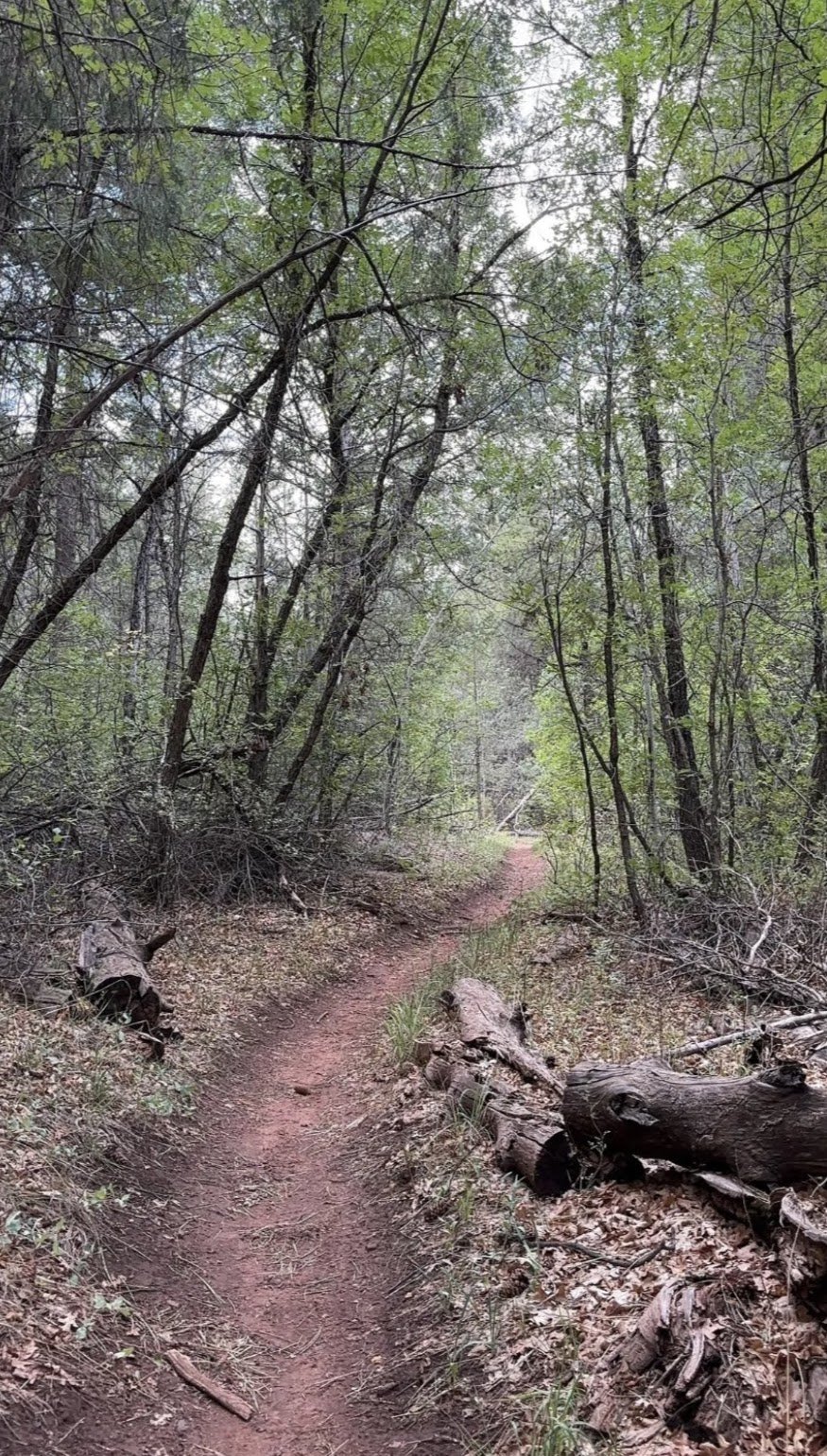
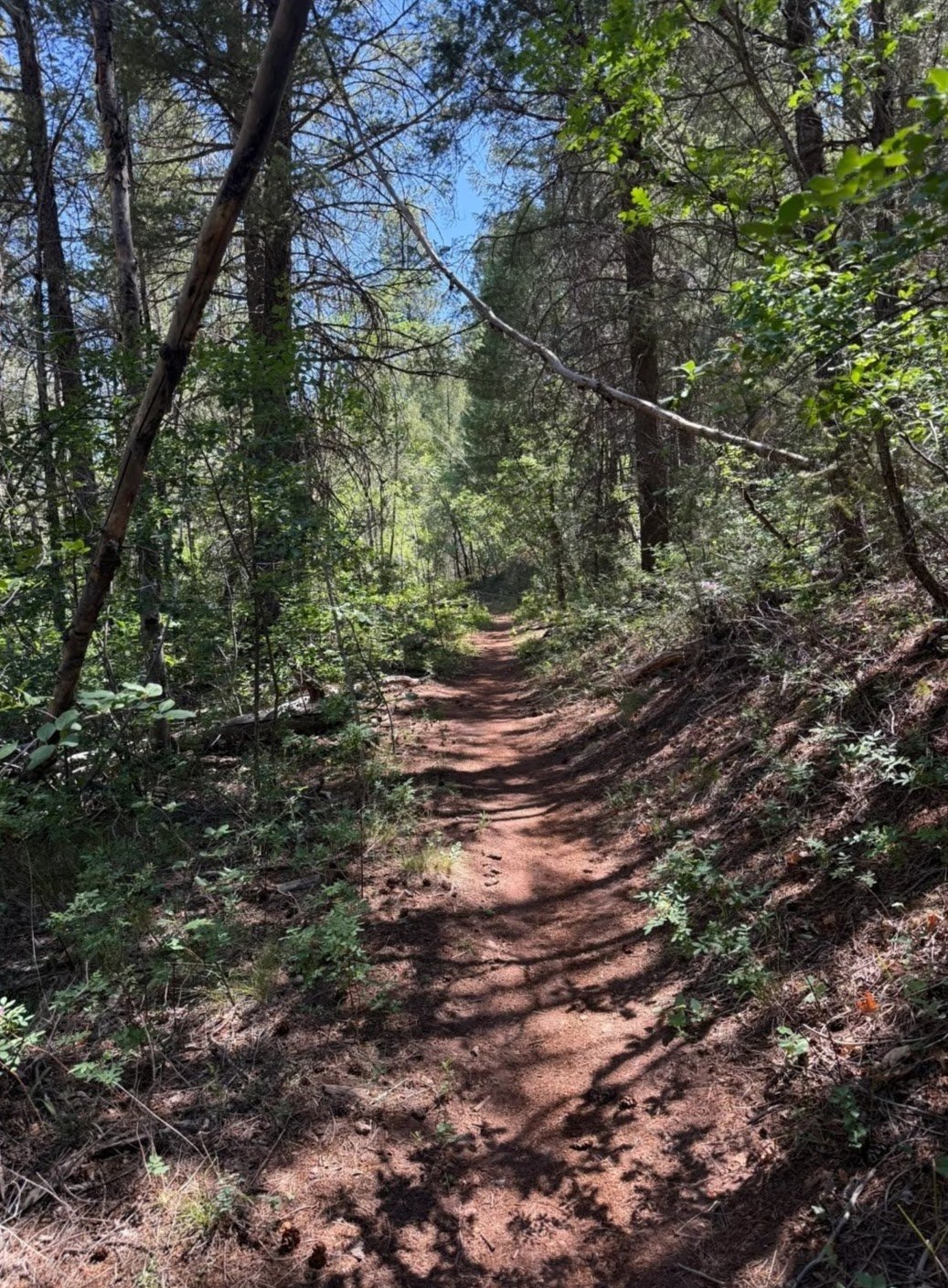
Additional handouts
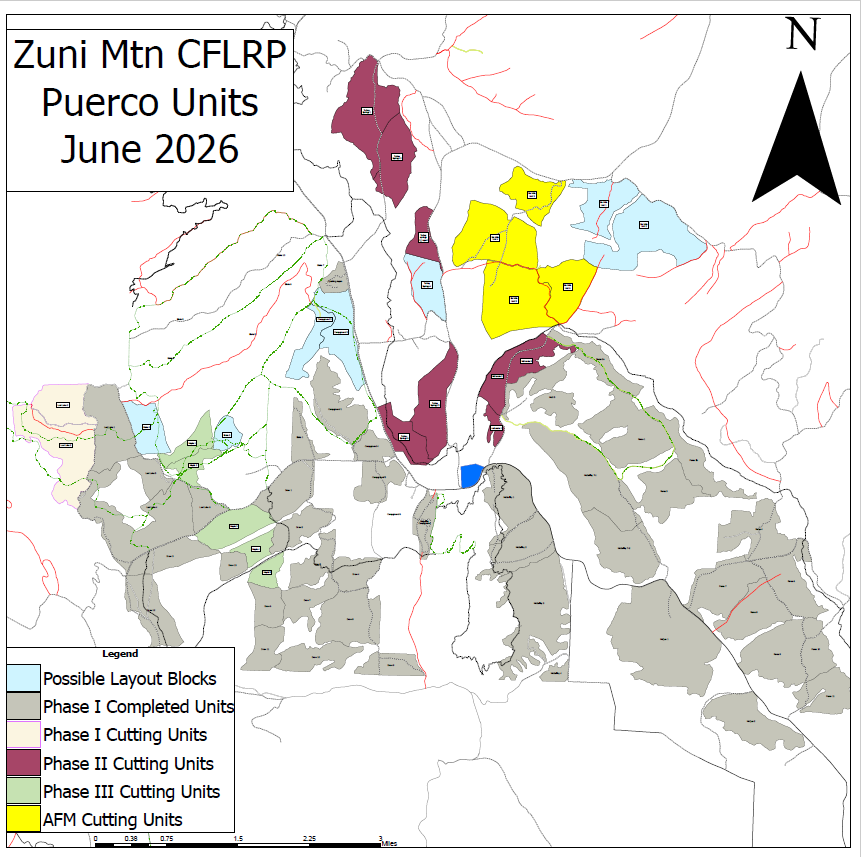
Map of thinning progress in Puerco units
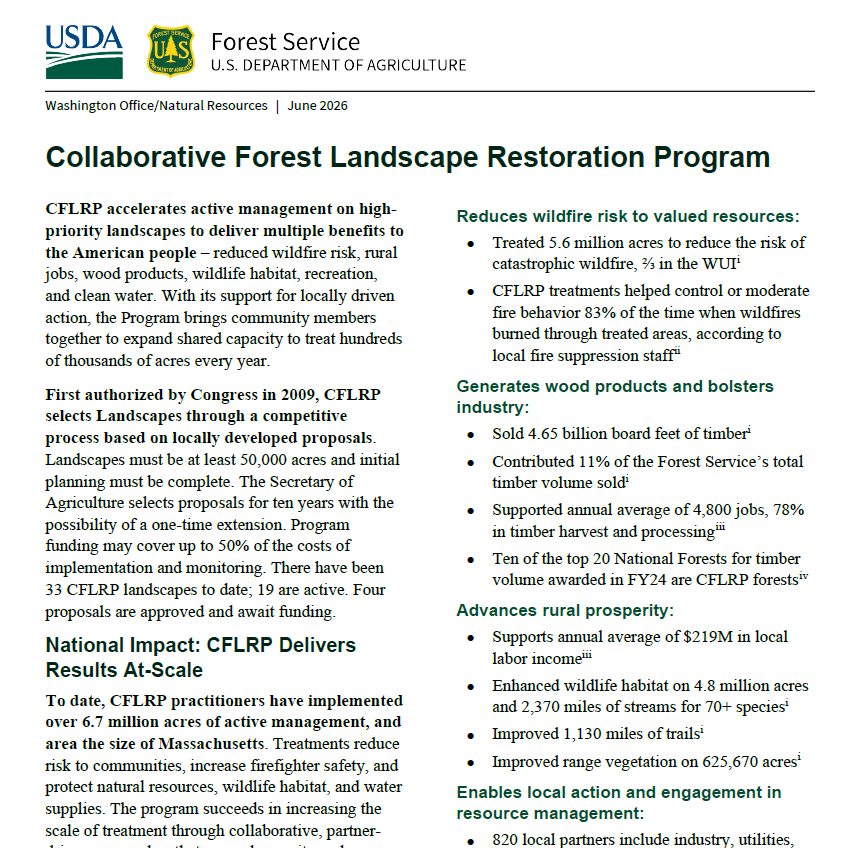
CFLRPs of the Southwest fact sheet
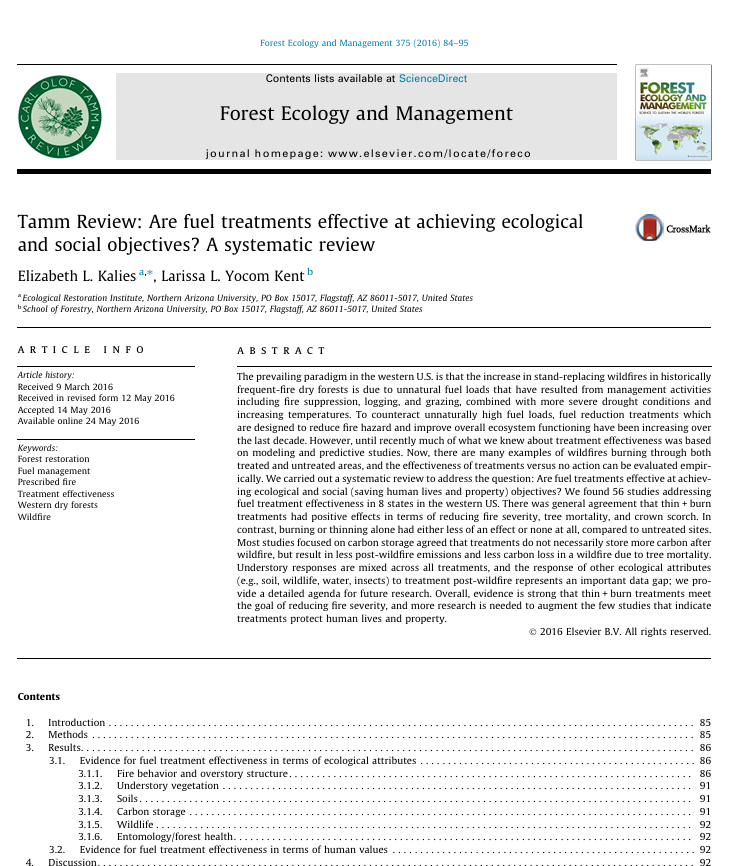
Peer-reviewed publication on fuel treatment effectiveness
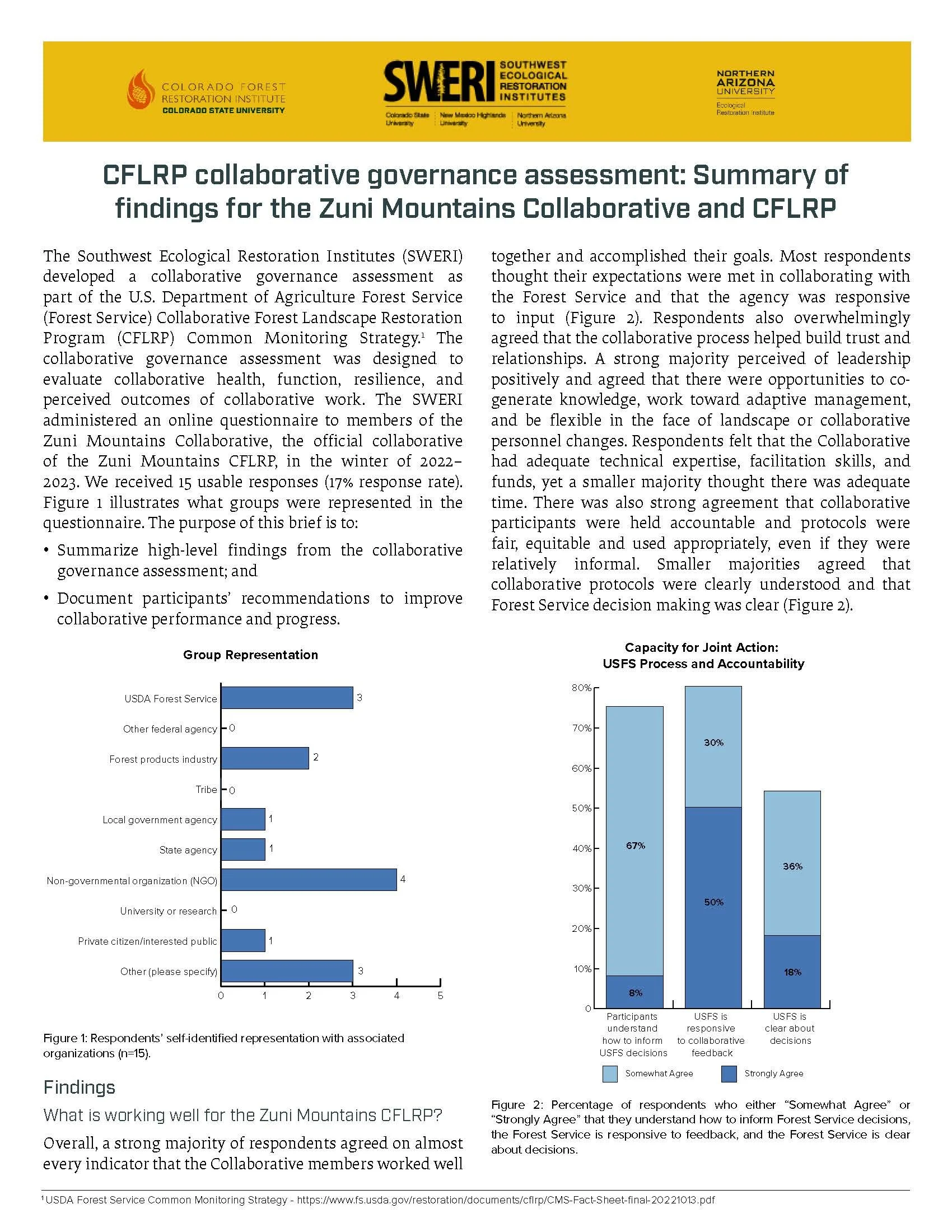
Findings from the first Zuni Mountains Collaborative governance survey. Researchers with the Ecological Restoration Institute are currently collecting data on how collaborative governance for the CFLRP has changed over the past few years, according to members and partners. See below to contribute your perspective.